
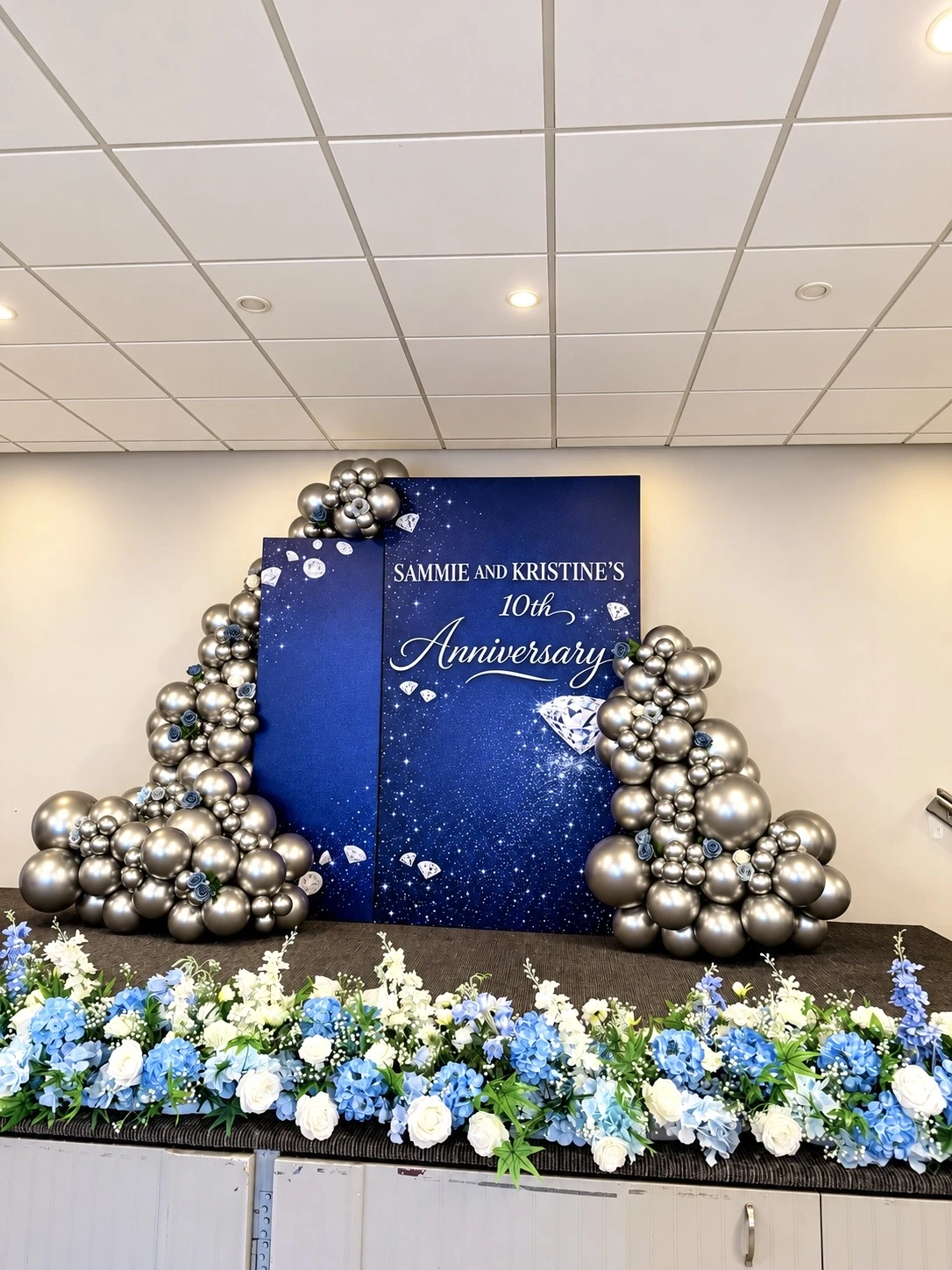
A balloon garland is more than a color combination. Its scale, placement, supporting structure, and relationship to the rest of the event determine whether it looks intentional. A beautiful reference photograph can still lead to disappointment if the installation is planned without measurements, venue access, lighting, or a clear idea of how guests will use the space.
This guide helps hosts and beginning decorators plan a balloon installation from the first reference image through removal. It focuses on the decisions you can make before requesting a quote, rather than promising a universal price or lifespan. Materials, location, weather, design complexity, and service arrangements all affect the finished result. The goal is to produce a practical brief that a balloon professional can translate into the right installation for your event.
Give the garland a specific job
Start by choosing what the installation should do. It might frame a birthday backdrop, draw attention to a welcome sign, soften the edges of a custom prop, or guide guests toward an entrance. These are different design jobs. A garland intended for close-up family photographs needs a different arrangement from one viewed mainly while people walk past it.
Write down the main viewing direction and the subject that should remain visible. If a name panel is the hero, balloons should frame the lettering without covering it. If a sculptural prop is the feature, the garland can support its shape rather than competing with it. Choosing the job first makes later decisions about size and placement much easier, and helps prevent an installation from becoming a collection of unrelated decorative ideas.
Measure the support and the surrounding space
Measure the backdrop’s finished width and height, then record the room around it. Include ceiling clearance, nearby doors, serving tables, and the area where guests will stand. A photograph usually hides part of this information. Ask for the actual footprint rather than estimating size from a person standing in an inspiration image.
Distinguish between the outline of the support and the length of a proposed garland. A piece following a curve or turning around a corner does not behave like a straight horizontal line. Suppliers may describe coverage differently, so clarify what their measurement includes. Send a simple sketch showing the desired path and where you want the installation to begin and end. That is more helpful than asking for “something like this” without dimensions.
Build a palette with roles, not just colors
Choose a dominant color, a supporting color, and an accent before adding more shades. A neutral can create breathing room between stronger tones, while a metallic finish can highlight particular clusters. The proportions matter as much as the names. A mostly cream installation with a little pink produces a different effect from equal amounts of cream and pink.
Share the venue’s existing colors and the backdrop artwork with the decorator. A warm wall, green drape, or dark floor can change how the palette reads. If a precise shade matters, discuss how the available materials compare under the event lighting. Screens are useful for communicating direction, but they are not reliable physical color standards. Agree on the intended overall impression instead of assuming every photograph represents an exact match.
Decide where fullness will make a difference
A successful arrangement usually has variation: some areas feel dense and sculptural, while others let the backdrop remain visible. Adding fullness everywhere can obscure the design and increase the installation’s footprint. Ask where additional volume would most improve the composition and where a lighter treatment would look better.
Consider how different balloon sizes contribute to the shape. Larger forms can establish the silhouette, medium forms connect the arrangement, and smaller details refine selected gaps. That does not mean every garland needs the same size mix or a fixed recipe. The right distribution depends on the space and style. Request a clear explanation of what “full,” “organic,” or “deluxe” means in a particular proposal, because those descriptions are not standardized quantities.
Match the design to the photography plan
Imagine the photographs before finalizing placement. Where will one person stand? Where will a group stand? Can the photographer step back far enough to include the installation? A display that fills an empty room beautifully may feel cramped once a family or group of friends moves into the frame.
Keep important text above or beside likely shoulder and head positions. Ask whether the garland blocks a name, number, logo, or meaningful part of the prop. If photography matters, make a simple mock frame using a phone from the expected camera position. Lighting should also be considered: strong backlighting or a dark corner can change the visual impact. Solve those issues through placement before adding more decorative material to compensate for an unsuitable location.
Plan indoor and outdoor installations differently
An outdoor design needs a location conversation, not just a note saying “backyard.” Identify sun exposure, shade, wind exposure, surface conditions, and the event hours. Conditions can change during the day, so a shaded morning setup may not remain shaded when photographs are taken. Give the supplier enough information to recommend a suitable approach.
Avoid treating any promised balloon lifespan as a guarantee that applies to all conditions. Ask the installer what appearance changes are possible with the materials and environment you have chosen. Establish a weather decision point and an alternative placement before the event. Moving indoors may require revised dimensions or a different support arrangement. A realistic backup plan protects the experience more effectively than assuming the outdoor reference photograph can be reproduced under any conditions.
Agree on supports and attachment permissions
Ask what will support the installation and who provides it. A wall, freestanding frame, custom backdrop, and rental prop each create different requirements. Do not assume balloons can be attached directly to a venue surface. Get the venue’s rules in writing and share them with the installer before the design is approved.
The installer should choose an appropriate attachment and support method for the actual conditions. Hosts should not improvise structural fixes or move an installed display without discussing it with the supplier. Keep exits, walking routes, and emergency equipment unobstructed. If the installation is near guests, confirm its intended boundary and how accidental contact will be managed. A garland is part of a working event space, so its placement must account for people as well as photographs.
Understand what a balloon quote includes
Ask whether the proposal includes design planning, materials, the support structure, delivery, installation, and removal. Some arrangements are pickup pieces, while others require on-site assembly. A quote for one service model should not be compared directly with a quote for another. Also clarify whether flowers, lettering, themed accents, or rental backdrops are separate items.
Travel and access can change the service scope. Stairs, long carries, restricted loading, or a narrow setup window may require different arrangements. If your budget is fixed, share the total and ask what shape or coverage best fits it. Reducing the number of decorated areas or using an available rental backdrop may preserve a strong visual result. Asking for a revised scope is more productive than comparing unspecified prices from unrelated inspiration photographs.
Use a practical setup timeline
Work backward from the first moment the installation must be ready. That may be a photographer’s arrival, a venue inspection, or the start of guest access rather than the advertised party time. Confirm when the installer can unload and how long the space will remain clear for work. Ask the supplier for the actual time they need.
Coordinate with other vendors whose work overlaps the same area. A cake table, draping installation, lighting stand, or custom print might need to be positioned before the balloons are finished. One person should hold the final placement plan and communicate changes. Send a simple schedule with access instructions and a contact number. A well-organized handoff is often the difference between a calm setup and several vendors trying to work in the same small space.
Include balloon safety in the event plan
Balloons and balloon fragments need active attention around children. The U.S. Consumer Product Safety Commission identifies uninflated balloons and broken pieces as a suffocation hazard. Keep those materials out of children’s reach and collect broken pieces promptly. Decorative use does not remove the need for supervision.
Assign an adult to monitor the area during the event, especially if children can touch the installation. Plan where discarded fragments and packaging will go rather than leaving cleanup materials near the display. Ask the installer what guests should avoid handling and share those instructions with whoever supervises the event. Safety planning should be specific and practical: a responsible person, a clear boundary, and a cleanup method are more useful than a vague reminder to be careful.
Plan removal before installation day
Confirm who removes the balloons, who collects rental supports, and when the space must be cleared. These may be separate responsibilities. If the venue has a strict departure deadline, tell the supplier before booking. A collection plan should also identify who remains on site to provide access after guests leave.
Do not assume decorative material can be released outdoors or left for venue staff. Keep the removal process controlled and follow the supplier’s instructions for handling supports and attachments. If the host is responsible for part of the cleanup, ask for a manageable written plan. Knowing the end of the job helps you assess the full service cost and prevents an enjoyable evening from ending with an unexpected dismantling task.
Send a brief a decorator can actually use
Your final brief should contain the event purpose, date, exact location, indoor or outdoor setting, installation measurements, photographs of access, preferred palette, reference images, service needs, and budget. Identify which parts of the references matter most and which are optional. A clear brief gives a professional room to solve the design rather than guess at your expectations.
Browse our portfolio for examples of how balloons work with props, backdrops, and themed settings, then ask about event services. If you are still organizing the overall spend, use the event décor budget guide first. A considered garland begins with the right location and purpose. Once those decisions are made, color and shape can do the enjoyable work of bringing the celebration together.
Your visual planning guide
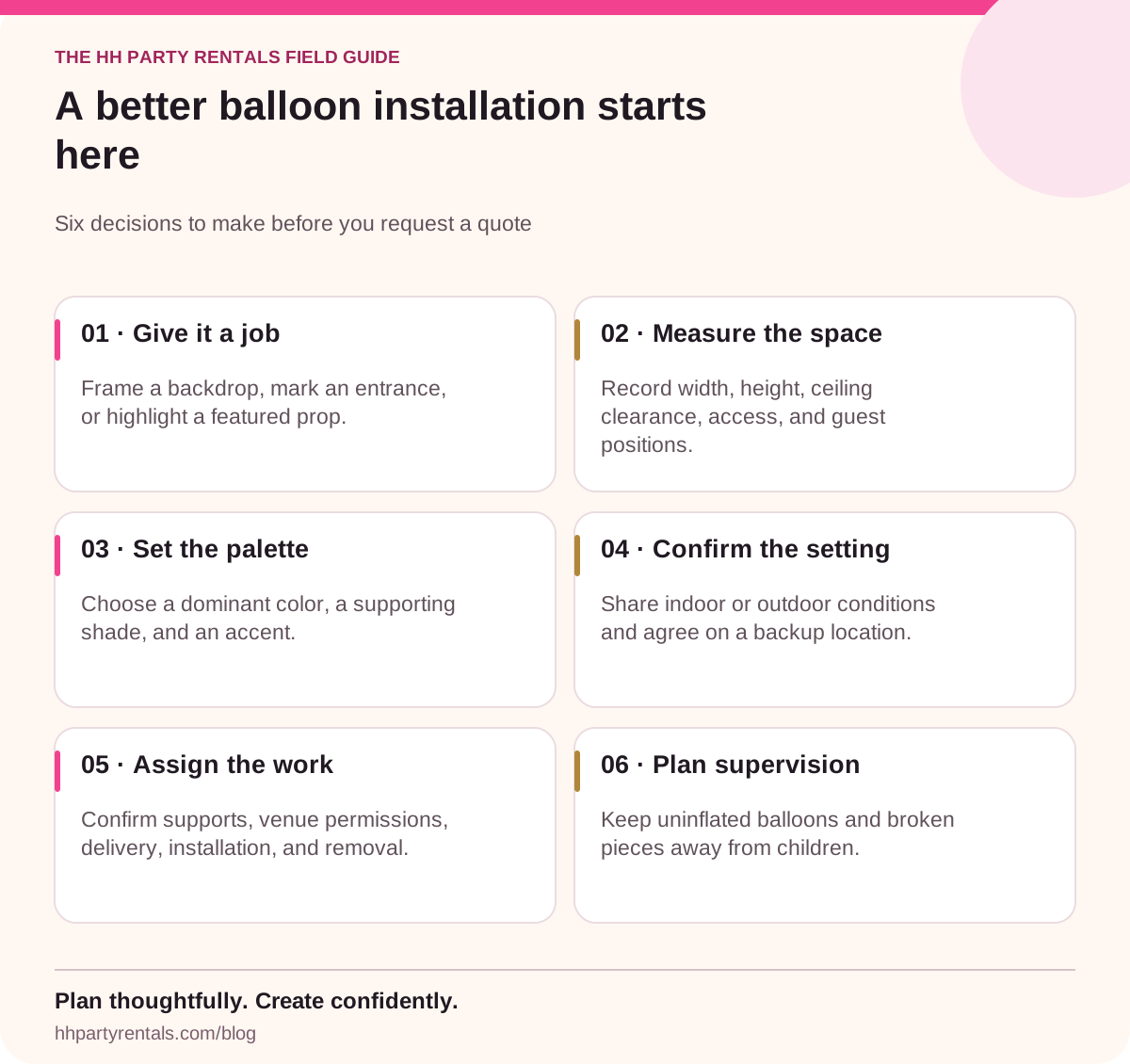
Read the infographic as text
- 01 · Give it a job
- Frame a backdrop, mark an entrance, or highlight a featured prop.
- 02 · Measure the space
- Record width, height, ceiling clearance, access, and guest positions.
- 03 · Set the palette
- Choose a dominant color, a supporting shade, and an accent.
- 04 · Confirm the setting
- Share indoor or outdoor conditions and agree on a backup location.
- 05 · Assign the work
- Confirm supports, venue permissions, delivery, installation, and removal.
- 06 · Plan supervision
- Keep uninflated balloons and broken pieces away from children.
Bring your next idea to life
Share your date, venue, measurements, and priorities. We can help you explore the relevant rentals, printing, or learning options.
Talk to HH Party Rentals